
Reviewed by Dr. Chandana Lakkireddy
Starting IVF treatment can bring many questions, especially about food and nutrition. Many women wonder whether certain foods can improve egg quality, support embryo implantation or increase their chances of pregnancy.
Should you eat pineapple after embryo transfer? Is papaya safe? Can you eat rice? Should you avoid coffee? Do you need a special IVF diet?
If you have these questions, you are not alone.
The good news is that you do not need an expensive or complicated diet during IVF. A balanced, nutritious eating pattern can support your overall health throughout fertility treatment.
1. What Should I Eat Before and During IVF Treatment?
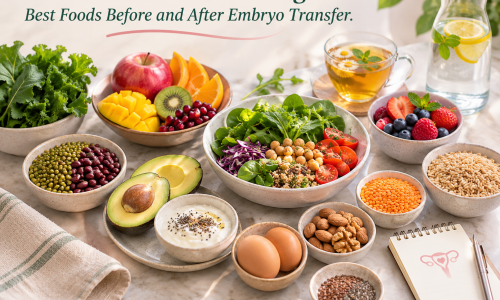
Focus on a balanced diet that includes:
- Protein: Eggs, dal, paneer, fish and chicken.
- Fruits: Apples, oranges, bananas and pomegranates.
- Vegetables: Spinach, carrots, broccoli and beans.
- Whole grains: Oats, brown rice, ragi and whole wheat.
- Healthy fats: Almonds, walnuts, chia seeds and flaxseeds.
These foods provide essential nutrients that support general health.
2. What Should I Eat After Embryo Transfer?
After embryo transfer, many women become extra cautious about their food choices.
You can continue eating your regular balanced meals. Include fresh fruits, vegetables, protein-rich foods, whole grains and pasteurised dairy products.
There is no special food that guarantees embryo implantation.
3. Can I Eat Pineapple After Embryo Transfer?
This is one of the most common questions patients ask.
Normal food portions of pineapple are generally safe. There is no reliable scientific evidence that pineapple improves embryo implantation or IVF success.
You do not need to force yourself to eat pineapple after embryo transfer.
4. Is Papaya Safe During IVF?
Ripe papaya in normal food portions is generally considered safe. However, avoid unripe or semi-ripe papaya during pregnancy because of potential safety concerns. Ask your fertility specialist if you have specific concerns.
5. Can I Drink Coffee or Tea During IVF?
You do not necessarily need to stop completely, but it is advisable to limit caffeine. During pregnancy, the commonly recommended limit is less than 200 mg per day.
Remember that coffee, tea, chocolate and some soft drinks also contain caffeine.
6. Which Foods Should I Avoid After Embryo Transfer?
For food safety, avoid:
- Raw or undercooked eggs, meat and seafood.
- Unpasteurised milk and dairy products.
- Alcohol.
- Excessive caffeine.
- Foods that may cause foodborne infections.
Choose freshly prepared, hygienically handled meals.
7. Does Eating Certain Foods Improve IVF Success?
No single food can guarantee successful implantation or pregnancy. IVF outcomes depend on several factors, including age, embryo quality, reproductive health and individual medical conditions.
A balanced diet supports general wellbeing, but it cannot replace fertility treatment or medical advice.
8. Do I Need to Follow Bed Rest or a Special Diet After Embryo Transfer?
Strict bed rest and a special implantation diet are not routinely required for everyone. Follow your fertility specialist’s advice regarding physical activity, medications and daily routine.
When Should I Consult My Fertility Specialist?
Every woman’s fertility journey is different. Your nutritional requirements may depend on your medical history, existing health conditions and treatment plan.
At Esha IVF Fertility Center, our team provides personalised fertility guidance to help couples understand every stage of treatment.
For individualised fertility and nutrition guidance, consult Dr. Chandana Lakkireddy.
Book Your Consultation Today
Esha IVF Fertility Center
Banjara Hills | Khajaguda, Hyderabad
Contact: 7798983333
Reviewed by Dr. Chandana Lakkireddy
Senior Infertility Consultant & Founder
Disclaimer: This article is for educational purposes only. Please consult your fertility specialist for individual dietary recommendations.